
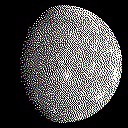
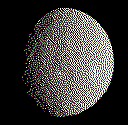


Mercury is the first planet from the Sun and the smallest of the eight classical planets, being even smaller in size than Ganymede and Titan, which are moons of Jupiter and Saturn respectively. However, its proximity to the Sun permitted only dense elements to remain, making it more massive than those two.
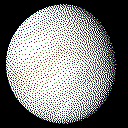
Venus is the second planet from the Sun, and the hottest by far; fitting coincidence seeing as it's named after the goddess of being hot. It also by some coincidence happens to be nearly the same size as Earth, which is the nearest planet to it. Scientists think it once had oceans made of water, which also would be fitting if only it still had, since its namesake was said to have been born from the sea. Venus depending on the time of year is also either known as the Morning Star or Evening Star, located nearby the Sun, and appears from Earth as the third brightest thing in the sky, only ever outshone by the Sun and Moon.
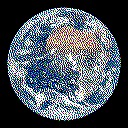
Earth is our homeworld. It is the largest and most massive of all the Tellurian (rocky) planets, and it's fucking filthy. Everything on it is contaminated with germs. And almost its entire solid surface is covered in dirt. It's a literal dirtball, which is also whence it gets its name. Keep on walkin' ain't no stoppin' in this dirty filthy rotten nasty little world we call our home... 🚬 It also has things you won't find anywhere else, such as 9,000 different kinds of bird, apples, butch lesbians, Galax, Virginia; Dairy Queen, incense, Super Smash Brothers Brawl, Neocities and its servers, pennies, Mazandarani people, Arcopal's Florine pattern dinnerware set, Tom & Jerry, and the koto.
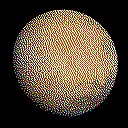
Mars is the fourth planet from the Sun. It is famously red and cold, and people are obsessed with colonizing it even though Venus is much nearer and warmer and sunnier. It has many rovers on its surface, and a helicopter. It was named after the god of war, who is also the brother of Venus. Orbiting Mars are two moons, Phobos and Deimos, both of which are so tiny they aren't even round. Might as well cast a pebble into orbit and call it a moon as well. That's right Pebble, I'm coming for you buddy...
Ceres is the smallest dwarf planet, and the only one within the orbit of Neptune. It was considered a major planet for decades after its discovery; however, after finding dozens of more asteroids in the region, a sort of belt of them, astronomers reclassified it and everything found near it as asteroids (etym: "star-like thing"). In A.D. MMVI, in the aftermath of the Pluto fiasco, it would be elevated to the newly defined rank of dwarf planet. Ceres has about one third the mass of the entire Asteroid Belt, and was discovered two years before Ohio gained statehood.
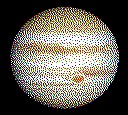
Jupiter is the most massive planet in the Solar System by far, and the only planet whose barycenter with the Sun (a barycenter is the common point orbited by two objects) is outside the Sun. The adjective for Jupiter things is "Jovian". The Jovian system hosts four planetary scale moons, the Galilean Moons, named after their discoverer Galileo Galilei. They are called Ganymede, Callisto, Io and Europa. Europa has a subsurface ocean, and more total water on it than Earth. Due to this and other factors, scientists are convinced it's one of the most likely spots in the Solar System besides Earth where life could exist. NASA has sent a probe, Europa Clipper, to find out more about it; it shall enter Jovian space in MMXXX and flyby Europa in MMXXXI. Jupiter itself makes up about 71% of all planetary mass.
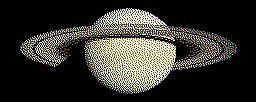
Saturn is the most distant planet that has been known since time immemorium. Saturn is famous for its rings, which despite their width are only about 5 times the height as Pebble. It's also known for the notion that it's somehow so light that it would float if you put it on Earth's ocean. Which is actually false; if Saturn were touching Earth's ocean or were anywhere near Earth, its enormous mass, which is 21% of all planetary mass, and about 95 times more massive than Earth, would instantly absorb and destroy us, as well as probably the other tellurians, and in fact, the entire Solar System would lose stability.
Uranus, formerly named George upon discovery, is the butt of jokes when it comes to the Solar System. Astronomers have advised it instead should be pronounced like "Urine-iss". Uranus is big, gassy, and contains solids within, but it also rotates on its side and weighs 14 times all of Earth. At the time of its discovery, the Revolutionary War wasn't even over yet.
Neptune is the most distant of currently recognized planets. It's very similar to Uranus, just without any of the funny stuff, and its surface isn't as perfect; it's got smudges and stuff. Famously known for its deep blue colour, it's not even actually that colour at all; that was a false colour photograph, and in reality it's the same hue as Uranus. It weighs 17 times Earth, and lends its name to the category of object, the "TNO": Trans-Neptunian Object, which is used for every rock further from the Sun than Neptune.
Pluto is the biggest dwarf planet, and the earliest known object outside the orbit of Neptune (although between MCMLXXIX and MCMXCIX it was within it). It was considered a major planet for decades after its discovery; however, after finding dozens of more TNOs in the region, a sort of belt of them, astronomers reclassified it and everything near it as Kuiper Belt Objects. In particular, the discovery of several TNOs a similar size to it and one more massive, made astronomers scared about adding too many new planets. Pluto and its biggest moon Charon share a barycenter outside either object, making some consider them a binary planetary system.
Makemake is a dwarf planet that is probably red. With current telescopy and the fact we've not sent a probe towards it, we don't know what its surface is like; all we can see is a point of light.
Eris is the most massive dwarf planet, and the seventeenth most massive thing in the Solar System after Triton, Europa, the Moon, Io, Callisto, Titan, Ganymede, Mercury, Mars, Venus, Earth, Uranus, Neptune, Saturn, Jupiter and the Sun. It is more massive than Pluto, and about the same size (originally thought to be bigger than it), and this fact led the media to call it the tenth planet for a year, but it made astronomers so scared they spent a year having conferences after which they decided to call it, as well as Pluto, Ceres, Makemake and Haumea, dwarf planets.
Planet Nine, also known as Planet X (not for the Roman numeral), is a hypothesized planet extremely far away, whose orbit may take it as close as 200 AU and as far as 800 AU from the Sun. Even at its closest approach, sunlight would take over a day to reach it, and its orbit would take millenia to complete. HAPPY NEW YEAR! Astronomers think it might exist due to an observation of many distant TNOs having hard to explain clustered orbits. It's thought to be about 5 to 10 times the mass of Earth, and be similar to Uranus and Neptune, or possibly otherwise be a huge rocky-icy world. If discovered, someone will give it a more fitting name.